
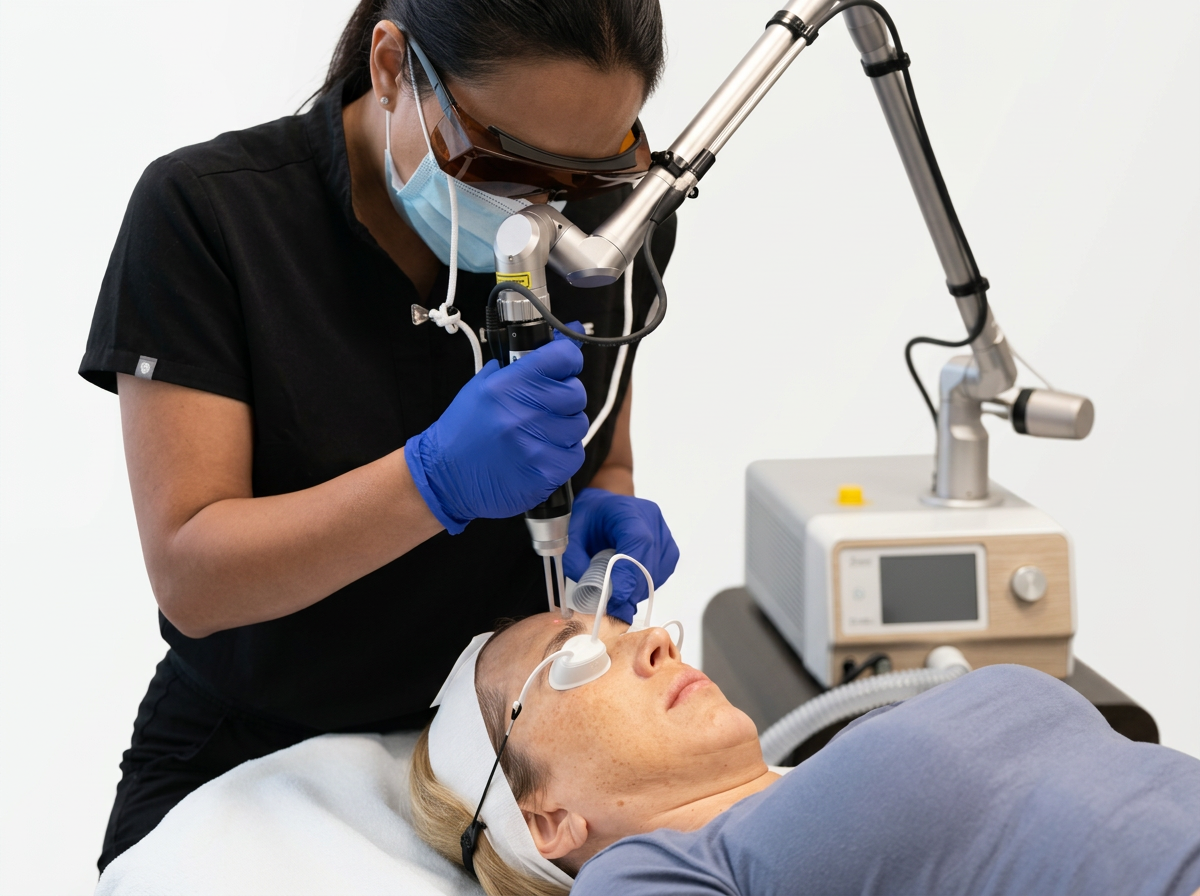
❋Melasma + Sun Damage
Understanding a Condition That Doesn't Just Go Away
What is melasma?
Melasma shows up as patches of brown or gray-brown discoloration, most often on the cheeks, forehead, upper lip, and jawline. Sun damage — including solar lentigines (“sun spots”) and general photoaging pigment — shows up similarly, though the underlying mechanism is a bit different. What they share is this: both are driven by melanocytes, the pigment-producing cells in your skin, going into overdrive.
Melasma is complex, and it's rarely caused by just one thing. Common contributing factors include:
❋ UV exposure + Heat
Even brief, incidental sun exposure can trigger or worsen melasma. Heat alone (not just UV) can worsen melasma in susceptible people.
❋ Hormonal shifts
Pregnancy, birth control, and hormone therapy are well-documented triggers.
❋ Genetics
Family history significantly increases risk.
❋ Visible light
Even from screens and indoor lighting, in some patients.
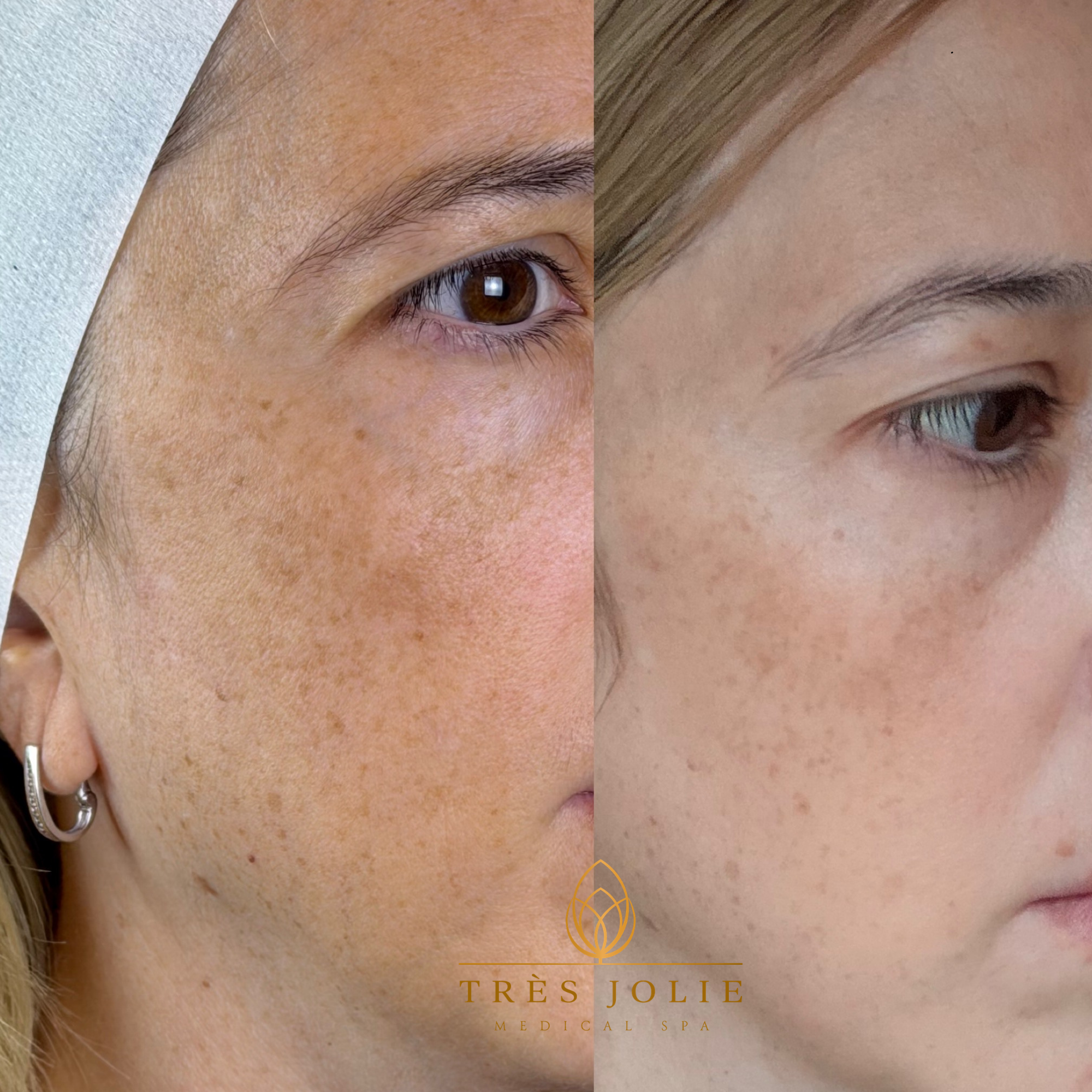
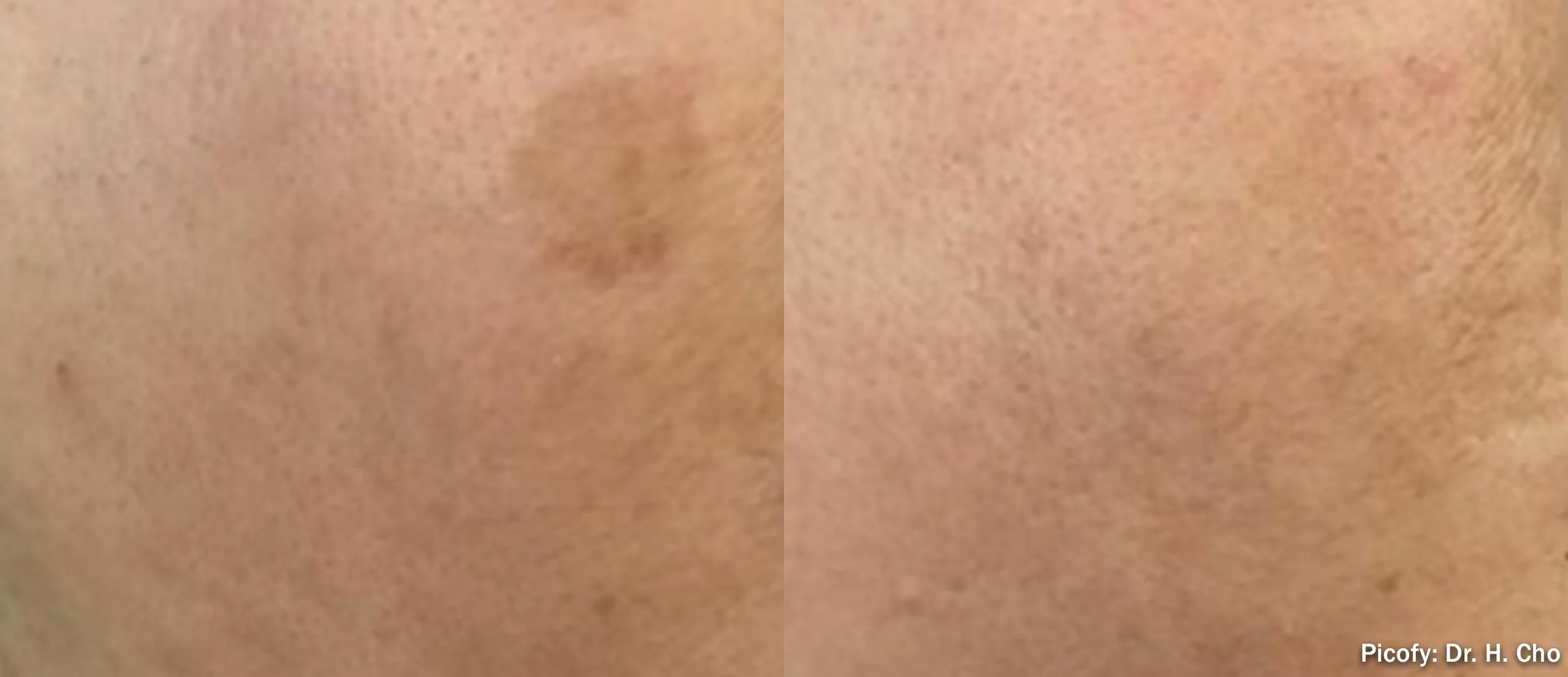
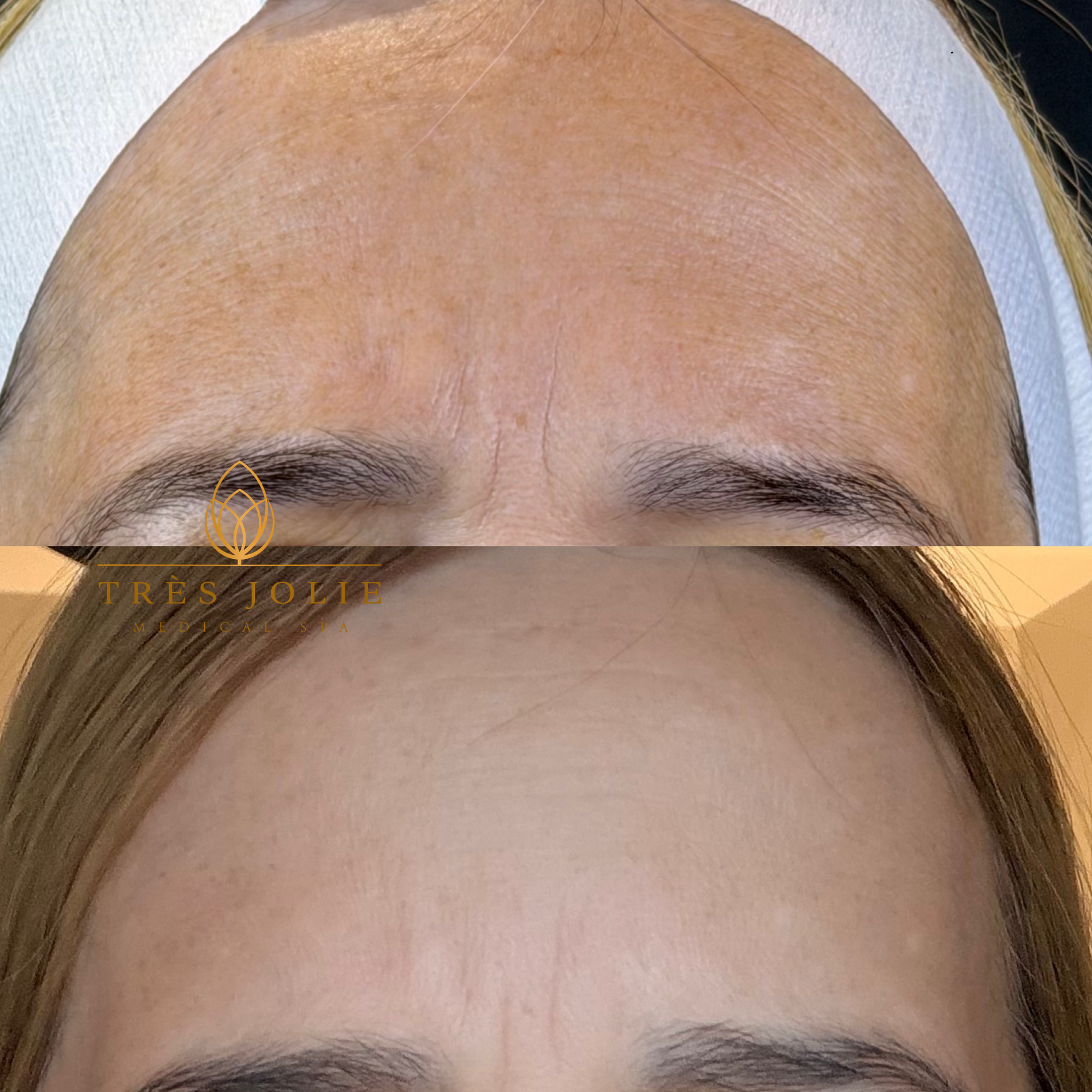
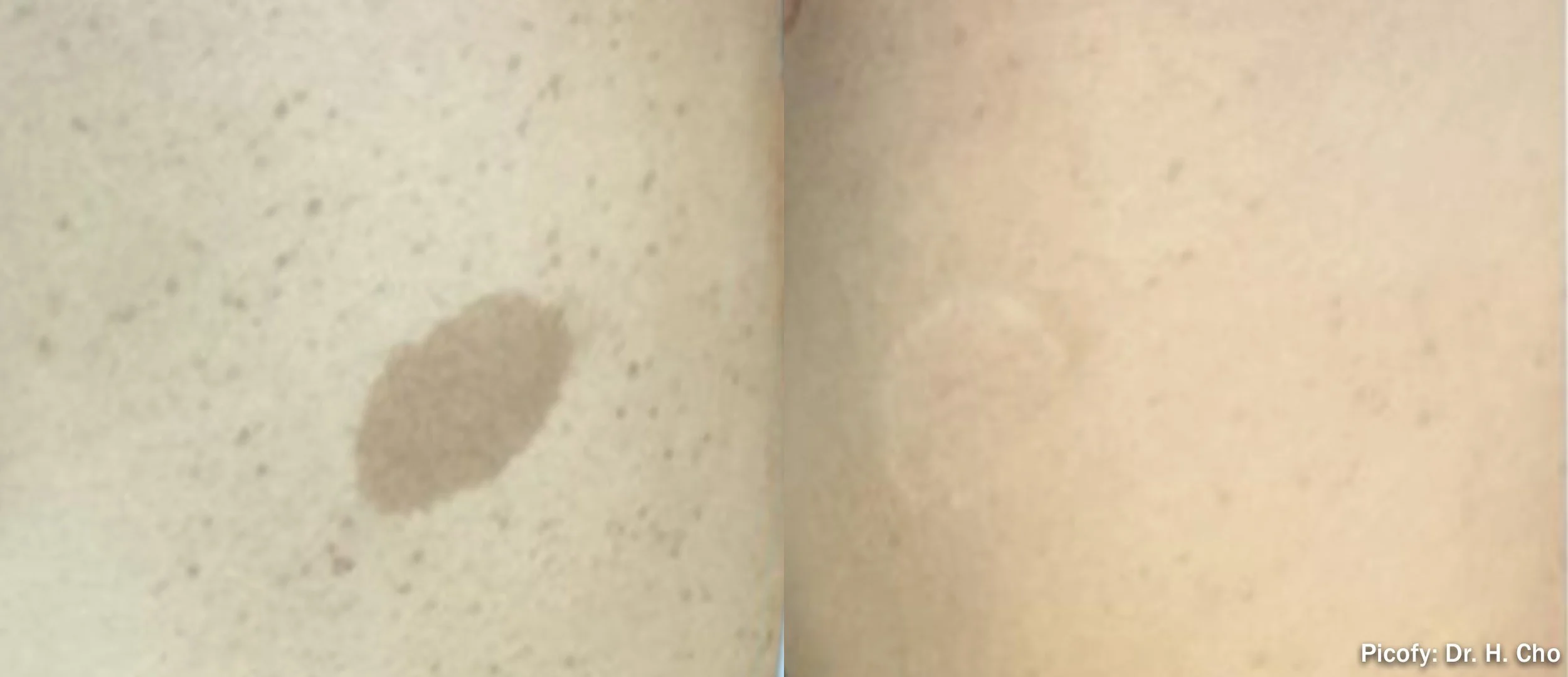
How melasma and sun damage are generally treated
Traditional approaches include topical lightening agents (like hydroquinone), chemical peels, strict sun protection, and various laser and light-based therapies. Results vary widely — melasma in particular is notorious for responding well initially, then relapsing, especially if sun protection and maintenance therapy lapse.
We use Picofy's picosecond laser technology to target excess pigment with precision — its ultra-short pulses fragment pigment particles while minimizing heat transfer to surrounding skin, which matters in melasma specifically, since heat itself can aggravate this condition.
But the laser is one part of a larger plan. Every melasma treatment plan includes:
How we treat it here
-
Prescription-strength brightening agents used strategically, not indefinitely, to manage pigment production between sessions
-
We'll tell you upfront how many sessions to expect and what maintenance looks like, because melasma is a condition you manage, not one you “finish”
-
Not just to check results, but to adjust your plan as your skin responds
-
Because without this, even excellent laser results can relapse
Melasma is a chronic condition for most patients. We won't tell you otherwise — but with the right combination of laser treatment, topical management, and consistent follow-up, it is very treatable, and most patients see real, lasting improvement.
Schedule Your Consultation
Let's talk about what's driving your melasma and build a plan around it.
(312) 929-4508