
❋Tattoo Removal
A Process With a Finish Line
How tattoo removal works
Unlike melasma or PIH, tattoo removal isn't a chronic condition to manage — it's a defined process with a clear endpoint. That doesn't mean it's fast. Tattoo ink sits deep in the dermis, and your body needs time between sessions to clear fragmented pigment naturally.
❋ Ink color + density
Black and dark blue respond fastest; greens, yellows, and light colors are more stubborn. Cover-ups and heavily layered tattoos take longer.
❋ Depth and age
Older, professionally applied tattoos often respond differently than newer or amateur work
❋ Depth and age
❋ Expert Facilitation
Treatment settings are adjusted to protect your specific skin type from unwanted pigment changes
Areas with better circulation (like the face and neck) tend to clear faster than areas like the ankle or foot
How tattoo removal is generally approached
How we treat it here
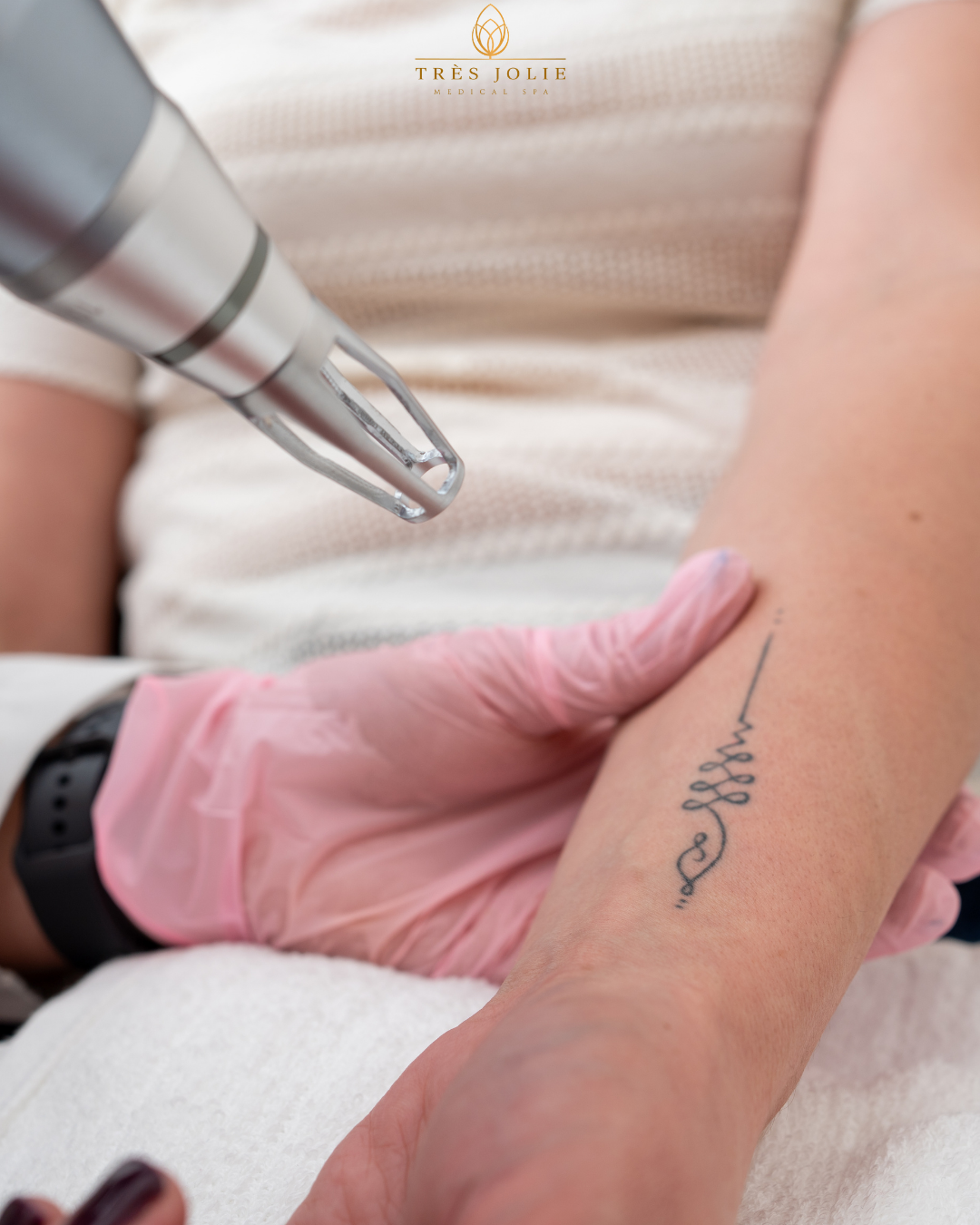
We use Picofy's picosecond platform, built specifically for the kind of precision tattoo removal demands — breaking down ink effectively while minimizing thermal damage to the skin around it.
Your treatment plan includes:
Most tattoo removal today uses Q-switched or picosecond lasers, which shatter ink particles so your body's immune system can clear them over the following weeks. Picosecond technology, in particular, has become the standard for its ability to fragment ink into smaller particles with fewer sessions and less risk to surrounding skin than older technology.
-
Based on your tattoo's ink, size, and location, so you know what you're signing up for
-
We won't over-treat to rush results; adequate healing time between sessions protects your skin and your outcome.
-
To support clearance between sessions and protect the skin as it heals
-
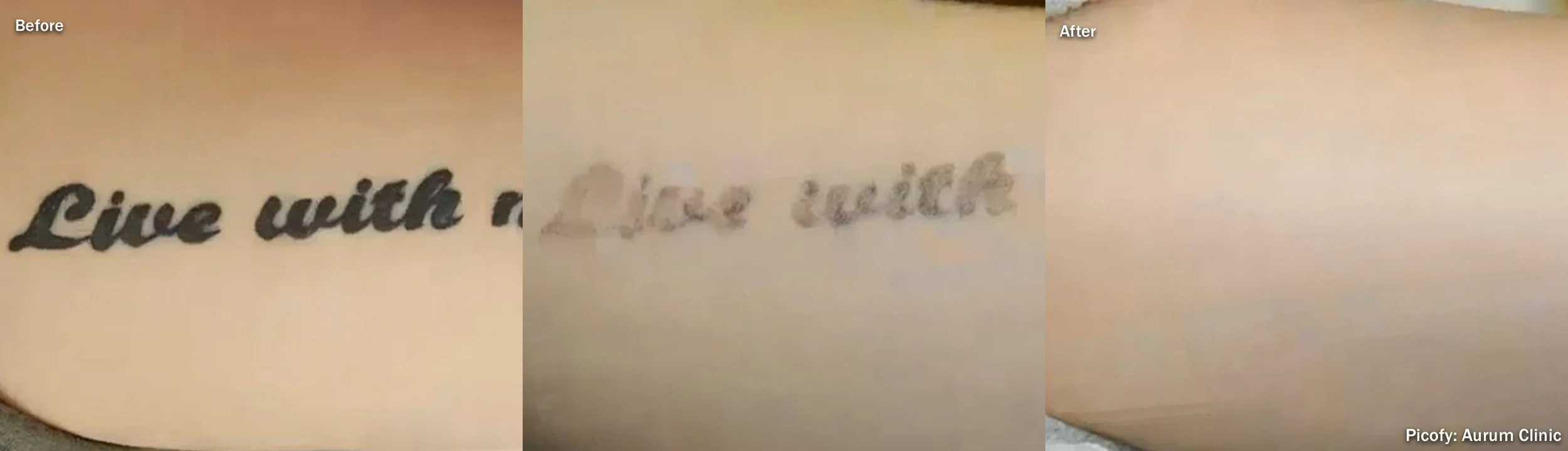
So you can see real fading over time, not just hope it's working.
Tattoo removal is the one condition on this page with a true endpoint — but getting there still takes real commitment. Most tattoos need multiple sessions spaced months apart. We'll be honest with you about what to expect at every step, so there are no surprises along the way.
Schedule Your Consultation
Find out how many sessions your tattoo will realistically need — and let's get started.
(312) 929-4508